New Software Enhances James Webb Space Telescope Exoplanet Imaging
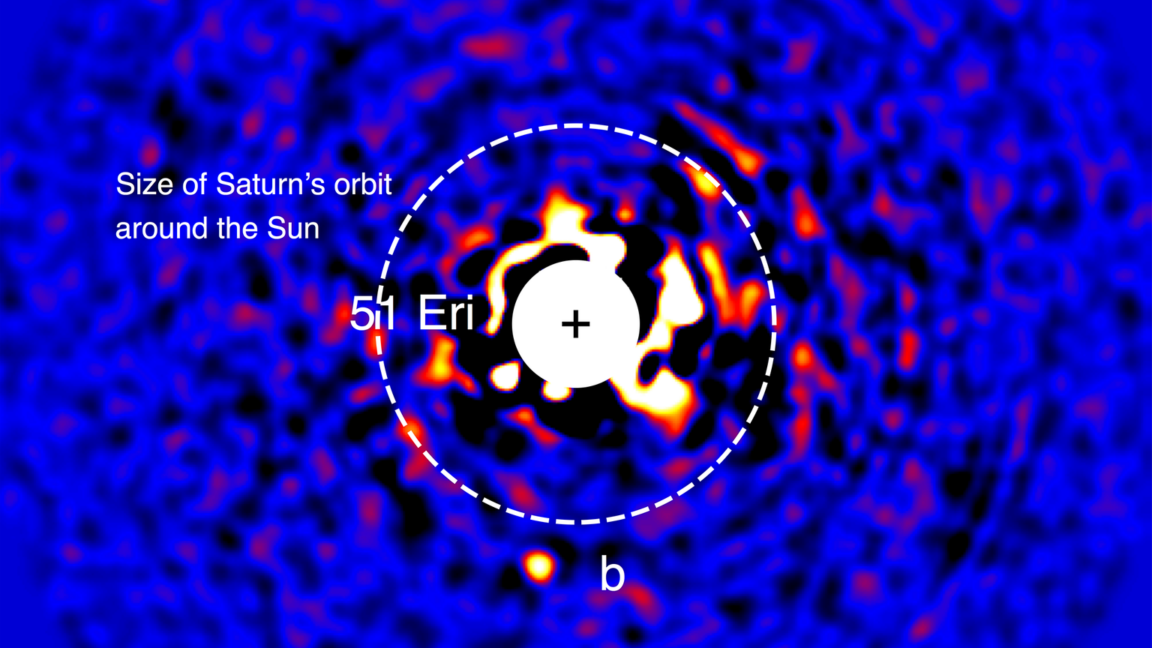
The James Webb Space Telescope (JWST) continues to push the boundaries of astronomical observation, and a recent breakthrough in data processing is set to sharpen our view of distant worlds. Researchers have developed a sophisticated software suite designed to optimize the physical model of the telescope, effectively filtering out noise that has historically obscured the faint light of exoplanets.
Capturing images of exoplanets is an immense technical challenge. These planets are often millions of times dimmer than their host stars, making them nearly impossible to distinguish from the glare of the star itself. While the JWST is equipped with advanced coronagraphs to block out starlight, residual noise and hardware artifacts can still interfere with the clarity of the resulting data. The new software addresses this by creating a highly accurate digital twin of the telescope’s optical system.
By simulating the telescope’s physical behavior with greater precision, the software can better predict how light interacts with the mirrors and instruments. This allows scientists to subtract the ’noise’—the unwanted light patterns and thermal fluctuations—more effectively than previous algorithms. The result is a significant increase in the signal-to-noise ratio, enabling the detection of smaller, cooler, and more distant planets that were previously lost in the data.
This advancement is particularly crucial for the study of planetary atmospheres. With cleaner images, astronomers can perform more accurate spectroscopy, identifying the chemical composition of exoplanet atmospheres to search for signs of water, methane, or other biomarkers. As the JWST continues its mission, this software upgrade serves as a reminder that the telescope’s scientific output is not just a product of its hardware, but also the evolving ingenuity of the software used to interpret the cosmos.
Sources: Ars Technica
Aggregated summary. Original: Ars Technica