Denmark’s Supreme Court to Decide on Legality of ‘Parallel Societies’ Evictions
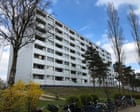
The Danish Supreme Court is poised to deliver a landmark ruling that could redefine the boundaries of housing policy and anti-discrimination law in the country. At the heart of the legal battle is a challenge brought by former residents of the Nøjsomhed-Sydvej housing complex in Helsingør, who were evicted under the controversial legislative framework previously dubbed the ‘ghetto law’.
The central question before the court is whether the government’s classification of residents based on their ’non-western’ background constitutes racial discrimination. While the Danish government maintains that the removal of residents from these housing complexes is purely a matter of urban planning and social cohesion—now officially referring to these areas as ‘parallel societies’—critics argue that the policy disproportionately targets minority groups.
For years, the ‘ghetto law’ has been a subject of intense domestic and international debate. Proponents of the legislation argue that it is a necessary tool to prevent the formation of isolated communities where social integration is perceived to be failing. By limiting the number of residents with non-western backgrounds in certain neighborhoods, the state aims to encourage a more diverse demographic mix. However, the plaintiffs in this case contend that such policies rely on discriminatory metrics that violate fundamental human rights and equality principles.
The outcome of this appeal is expected to have significant implications for thousands of individuals living in areas designated as ‘parallel societies’. If the Supreme Court rules that the classification system is discriminatory, it could force the government to overhaul its approach to social housing and integration. Conversely, a ruling in favor of the state would likely solidify the legal standing of these controversial measures, potentially emboldening the government to continue its current trajectory in urban policy.
Legal experts suggest that this case highlights the ongoing tension between state-led social engineering and the protection of minority rights. As the court deliberates, human rights organizations are closely watching, hoping for a verdict that upholds the principle of non-discrimination regardless of a resident’s origin or background. For the evicted families of Helsingør, the ruling represents a final opportunity for legal redress in a struggle that has spanned several years and sparked nationwide soul-searching regarding Denmark’s identity and values.
Sources: The Guardian World
Aggregated summary. Original: The Guardian World